
You fitted bigger wheels. The car looks better. The arches are happier. The stance is improved. Then you drive it and something feels off. It is not broken, exactly. It just feels heavier, slower and slightly less keen.
There are two usual suspects: effective gearing and rotational mass. There is a third, quieter one too: unsprung mass. None of them is a mystery once you put numbers on it.
Suspect one: the gearing got longer
If the new wheel and tyre package has a larger overall diameter than the old one, the car travels further for each wheel rotation. That makes the gearing longer. At the same engine RPM, road speed is higher, but the engine has less leverage over the road. The result can feel like a longer diff. Lower cruising revs are nice. Blunted acceleration is less nice.
The numbers are bigger than people expect. Say the car came on 205/55R16. That tyre is about 632 mm tall. The owner goes to an 18-inch wheel and picks 225/45R18 because it looked right on a forum build. That tyre is about 660 mm tall.
205/55R16: (205 x 0.55 x 2) + (16 x 25.4) = 631.9 mm
225/45R18: (225 x 0.45 x 2) + (18 x 25.4) = 659.7 mm
659.7 / 631.9 = 1.044, so 4.4% taller
A 4.4 percent taller tyre does the same job as a 4.4 percent longer final drive. On a car with a 4.10 diff, that is roughly like fitting a 3.93. On a 3.90 it is like fitting a 3.74. Nobody would call that small if it arrived in a box marked “diff”.
The same wheel size with the right tyre tells a different story. A 225/40R18 is about 637 mm tall, less than one percent over the original. Same wheel, same look, almost no gearing change. The difference is two numbers on the sidewall that most people never check.
This matters most on lower-powered cars and naturally aspirated engines with narrow power bands. A few percent can be enough to move the car out of the sweet spot. The engine now has to work harder to pull the same gear, especially at low speed. Turbo cars notice it too, because each upshift now drops the revs a little further below where the boost arrives.
Your speedometer notices as well. It counts revolutions, not distance, so with a taller tyre it reads 4.4 percent lower than it did before at the same true speed. That is worth knowing before the next speed camera, and before you decide the car is slow based on a number that has quietly changed.
Suspect two: rotational mass
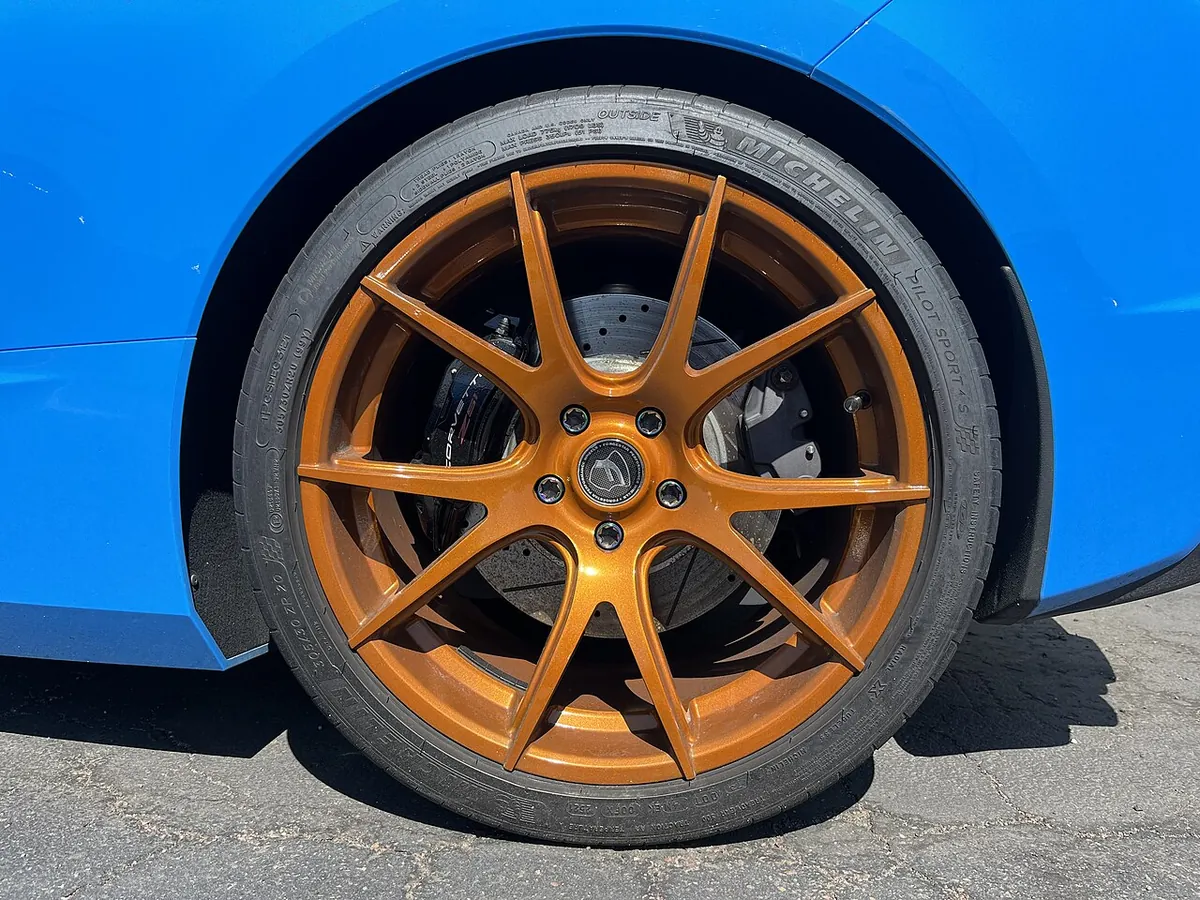
Bigger wheels are often heavier. Heavier tyres can be part of it too. Weight at the wheel is especially noticeable because the engine has to accelerate it rotationally as well as move it down the road. A kilogram at the rim costs more under acceleration than a kilogram in the boot, because it has to be spun up as well as carried along.
That is why a wheel change can make a car feel slower even when the tyre diameter barely moved. Compare the weights before you buy. A good lightweight 18 can weigh less than a cheap heavy 17. The size on the advert tells you nothing about that.

Suspect three: unsprung mass
There is also unsprung mass. Heavier wheels make it harder for the suspension to control the tyre over bumps. The car may ride worse, grip worse on rough roads and feel less delicate. This is how a “wheel upgrade” becomes a handling downgrade with better photos.
Low-profile tyres add to the effect. Less sidewall means less cushioning between the rim and the road, so more of every pothole goes straight into the suspension and the rim. On a smooth track that can feel sharp. On a broken B-road it can feel like the car is looking for a fight.
When bigger wheels are the right call
Brake clearance can justify bigger wheels. So can tyre availability, motorsport rules and fitment goals. Some older sizes are getting hard to buy in a decent tyre, and a common modern size can mean better rubber for less money. The problem is not bigger wheels by themselves. The problem is changing them without checking the full package.
How to check before you buy
- Write down the current tyre size and the one you plan to run.
- Compare the overall diameters. Within about one percent is a like-for-like swap. Two to three percent is noticeable. Four percent and up changes how the car drives.
- Compare wheel and tyre weights if you can find them. Wheel makers and tyre retailers often publish both.
- Put the new tyre size into BoxSelector and check the speed in each gear against the old one.
- Check clearance at full lock and full bump, not just parked on a flat drive.
- Tell your insurer. Wheels are a modification.
If the gearing has moved longer, pick a tyre size that brings the diameter back, or budget for a different final drive to get the old urgency back. If the wheels are much heavier, there is no calculator magic for that. Lighter wheels help.
Project cars often feel slow after bigger wheels because the wheels changed more than the look. They changed the effective gearing, the mass the engine has to spin and the job the suspension has to do. Style is allowed. Just make it pay rent.